Expandable container houses have become increasingly popular in cold-climate regions such as Europe, Canada, New Zealand’s South Island, and Northern China. Their fast installation, high structural stability, and strong energy efficiency have made them a compelling alternative to traditional housing.
A common question from buyers is:
Can an expandable container house stay warm and perform well during harsh winter conditions?
The answer is yes—when equipped with the right insulation, roofing structure, and winter upgrades, expandable houses can perform exceptionally well in cold climates.
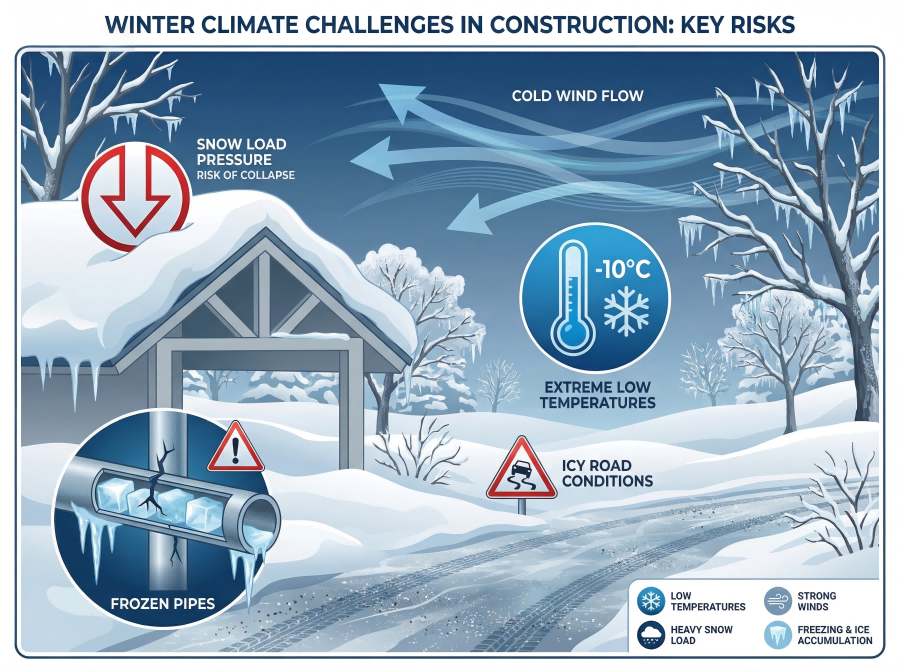
1. Winter Challenges in Cold Climate Regions
Winter conditions create several challenges for housing performance.
Typical winter challenges
- Temperatures frequently below 0°C
- Snow accumulation increasing roof load
- Strong winter winds and wind chill
- Heat loss through walls, roof, and floor
- Frozen water pipes
- Indoor condensation and humidity issues
Common buyer concerns
- Will the interior stay warm?
- Is the insulation thick enough?
- Can the roof carry snow load?
- Will the plumbing freeze?
- How high will the heating cost be?
Expandable houses, when properly configured, can effectively solve these concerns.
2. Insulation Performance of Expandable Container Houses
Expandable houses use high-performance insulated sandwich panels, which provide excellent thermal resistance.
Wall panel structure
Each panel consists of:
- Double-sided steel skins
- A PIR/PU insulation core
- Reduced thermal bridging design
Thermal performance is significantly stronger than traditional temporary or light-steel structures.
3. Comparison of Insulation Materials (PIR as the Best Option)
|
Insulation Material
|
R-Value Performance
|
Suitability for Cold Climates
|
|
PIR (Polyisocyanurate)
|
Very High (Best)
|
Excellent winter insulation
|
|
PU (Polyurethane)
|
High
|
Strong winter performance
|
|
Rock Wool
|
Medium
|
Good fire rating, moderate insulation
|
|
EPS
|
Low
|
Not recommended for extreme cold
|
Why PIR performs best in cold climates
- Higher R-value than PU and EPS
- Strong thermal stability
- Widely used in European and North American energy-efficient buildings
- Better fire performance
4. Roof and Floor Insulation: Essential for Winter Living
Roof insulation options
- PU insulated roof panels
- PIR roof panels (best for winter)
- Optional thicker insulation for colder regions
Floor insulation
- Added subfloor insulation layer
- Upgraded composite floor structure
- Compatible with underfloor heating systems
Result
Combined roof and floor insulation dramatically reduces winter heating demand and improves comfort.
5. Heating Systems Compatible with Expandable Houses
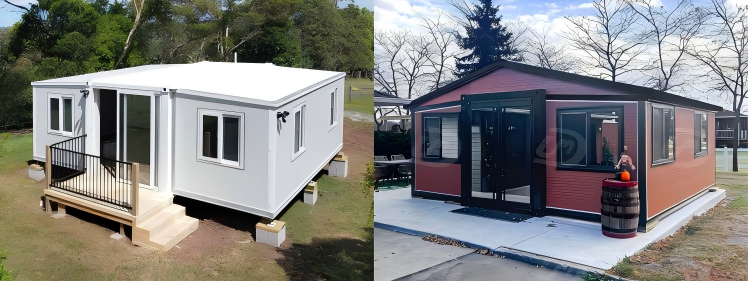
Expandable container houses support various heating methods, making them ideal for cold regions.
Recommended heating options
- Electric heaters
- Air-source heat pumps (high-efficiency)
- Infrared heating panels
- Electric underfloor heating
- Wood stoves (for off-grid living)
Energy efficiency
Because PIR/PU sandwich panels provide high thermal resistance, energy consumption for winter heating is significantly lower than in traditional steel cabins.
6. How Flat Roofs and Gable Roofs Perform in Snowy Conditions
Flat Roofs (Standard Expandable House Roof)
- Structurally stable
- Snow does not naturally slide off
- Snow removal is recommended in heavy snow regions
- A proper drainage system is required
Suitable for regions with light to moderate snowfall.
Gable Roofs
Gable roofs are the most recommended option for cold climates.
Advantages
- Snow naturally slides off
- Reduces long-term roof load
- Provides better waterproofing
- Extends roof lifespan
- Preferred in Europe, Canada, New Zealand, and other snowy regions
7.Preventing Frozen Pipes in Cold Weather
Frozen pipes are a key concern in cold regions.
Effective anti-freeze solutions
- Apply polyurethane foam insulation around exposed pipes to prevent freezing
- Add heat tape (electric heating cable)
- Install skirting around the base of the house to block cold airflow
- Maintain adequate indoor heating during winter
These measures significantly reduce the risk of pipe freezing.
8. Real Feedback from Cold-Climate Users
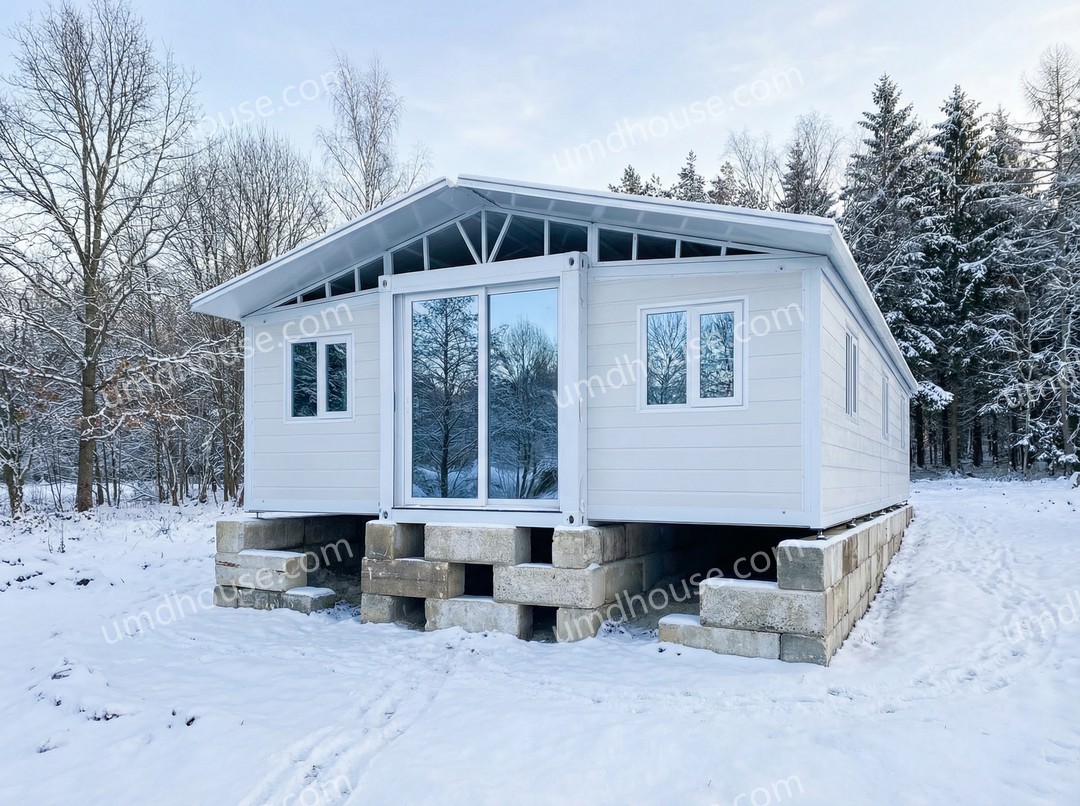
UMD expandable houses have been installed in multiple cold-climate regions.
Europe (Germany, Poland, Northern France)
- Winter temperatures: –5°C to –10°C
- PIR/PU 50–75 mm insulation maintains warmth
- Heating cost remains manageable
Northern China (–10°C to –20°C)
- Fast indoor heat-up
- No structural issues during winter
- Stable long-term residential use
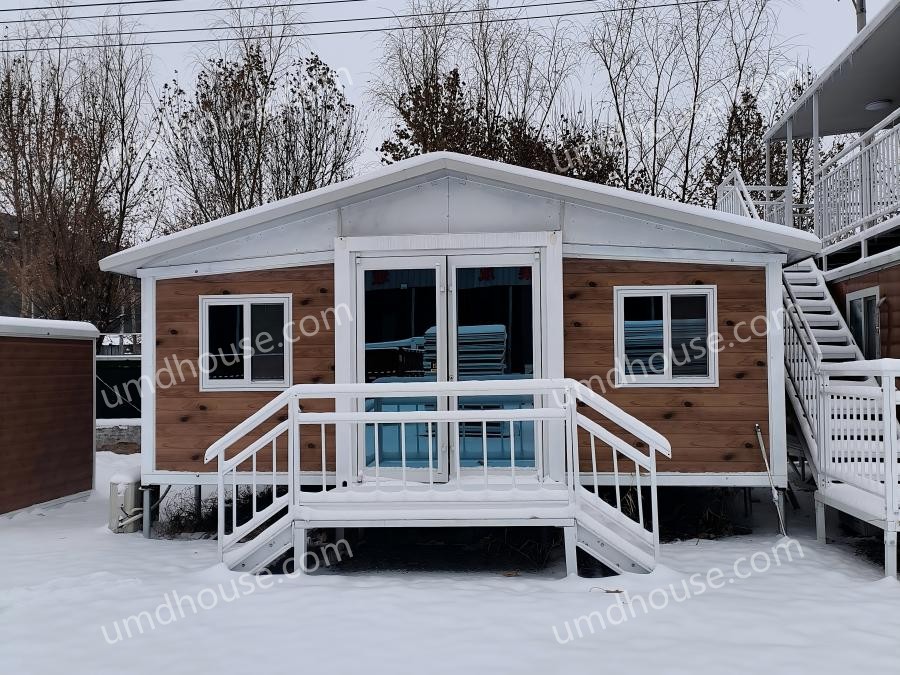
These cases demonstrate that expandable houses are fully suitable for cold climates.
9. Recommended Winter Upgrades (UMD Professional Advice)
To achieve optimal winter performance, UMD recommends:
- PIR insulation panels (best option for cold climates)
- Gable roof configuration
- Double-glazed windows
- Upgraded floor insulation
- Base skirting installation
- Heat tape for plumbing
- High-efficiency heating systems (e.g., heat pumps)
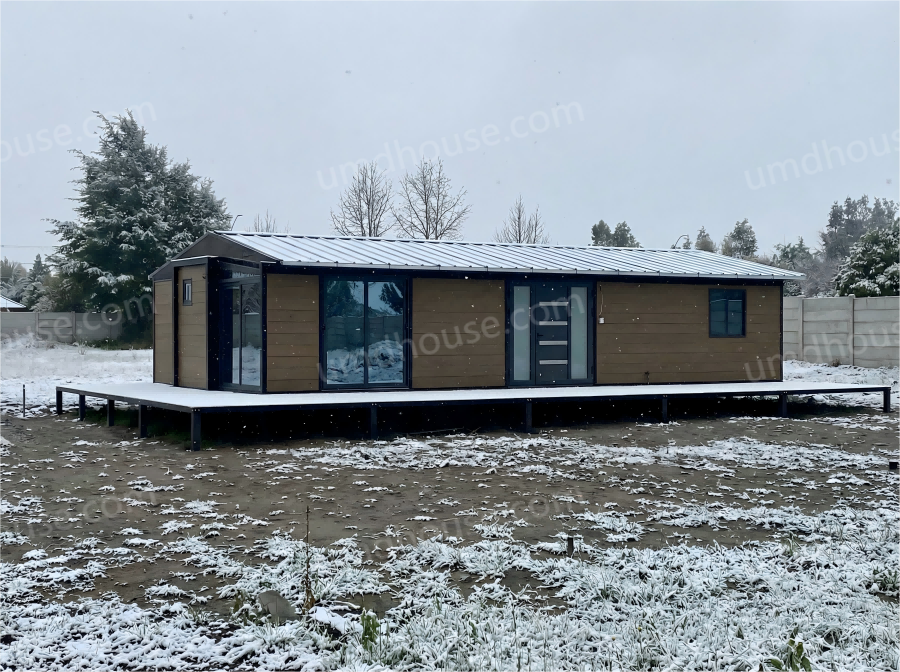
10. Conclusion: Expandable Houses Perform Very Well in Cold Climates
With the correct configuration, expandable container houses deliver excellent winter performance:
- Strong insulation
- Low heating energy consumption
- Reliable snow load handling
- Freeze-resistant plumbing
- Comfortable long-term living
They are ideal for:
- Residential use
- Farm cabins
- Campsites
- Resort units
- Worker accommodations
- Off-grid living


